
SMS filtering is the process operators and messaging systems use to block messages that look like spam, fraud, or unwanted bulk traffic before they reach a phone. If your business sends bulk SMS in Ghana and delivery rates are lower than you expect, filtering is often the reason. Messages that fail these checks are quietly dropped, so the customer never sees them and you get no warning.
This guide explains how SMS filtering works in Ghana, what triggers it, and the practical steps that keep your messages landing in customer inboxes. It is written for business owners, marketing teams, and developers, and it assumes no technical background.
What SMS filtering is
Filtering is a set of automated checks that sit between you and your customer. When you send a campaign, it does not go straight to the recipient. It passes through your messaging platform, out to the mobile operator, and through filters that decide whether the message is legitimate. Only messages that pass are delivered.
The goal of filtering is to protect subscribers from scams, phishing, and unwanted marketing. That is good for everyone, but it means genuine business messages can get caught too if they carry the same signals as spam. Understanding those signals is how you stay on the right side of the filter.
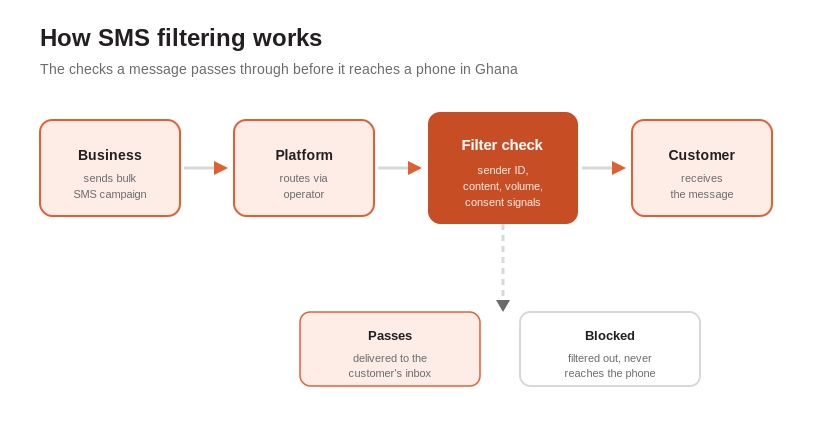
A message passes through several checks before it reaches a phone. Fail any of them, and it is blocked.
How SMS filtering works
Filters look at a few things at once. They check the sender identity, the content of the message, the volume and pattern of your sending, and whether there are signs the recipient agreed to hear from you. A message that looks clean on all of these gets through. A message that fails one or more is flagged or blocked.
Sender identity
Filters want to know who is sending. A registered sender ID, the short name that appears in place of a phone number, tells the operator the message comes from a known business. An unregistered or spoofed sender looks suspicious and is far more likely to be blocked. This is why sending bulk SMS in Ghana through a registered sender ID matters so much.
Message content
Content filters scan for spam patterns: known scam phrases, aggressive marketing language, all caps, and suspicious links. Loan bait and get-rich messaging trip filters fast. So do shortened links, because scammers use them to hide destinations. Plain, clear wording with a recognisable domain is treated more kindly.
Volume and sending patterns
A brand new route suddenly pushing a huge burst of messages looks like a spam operation. Filters watch for these spikes. Steady, predictable volume from an established route with direct operator connectivity builds a track record that helps your messages through.
Consent signals
Messaging people who never opted in generates complaints, and complaints teach filters that your traffic is unwanted. Sending only to people who agreed to hear from you keeps complaint rates low and delivery rates high.
What triggers SMS filtering
Most filtering comes down to a handful of avoidable mistakes. Seeing them side by side makes the pattern clear: filters reward messages that look like they come from a real business talking to people who want to hear from it.
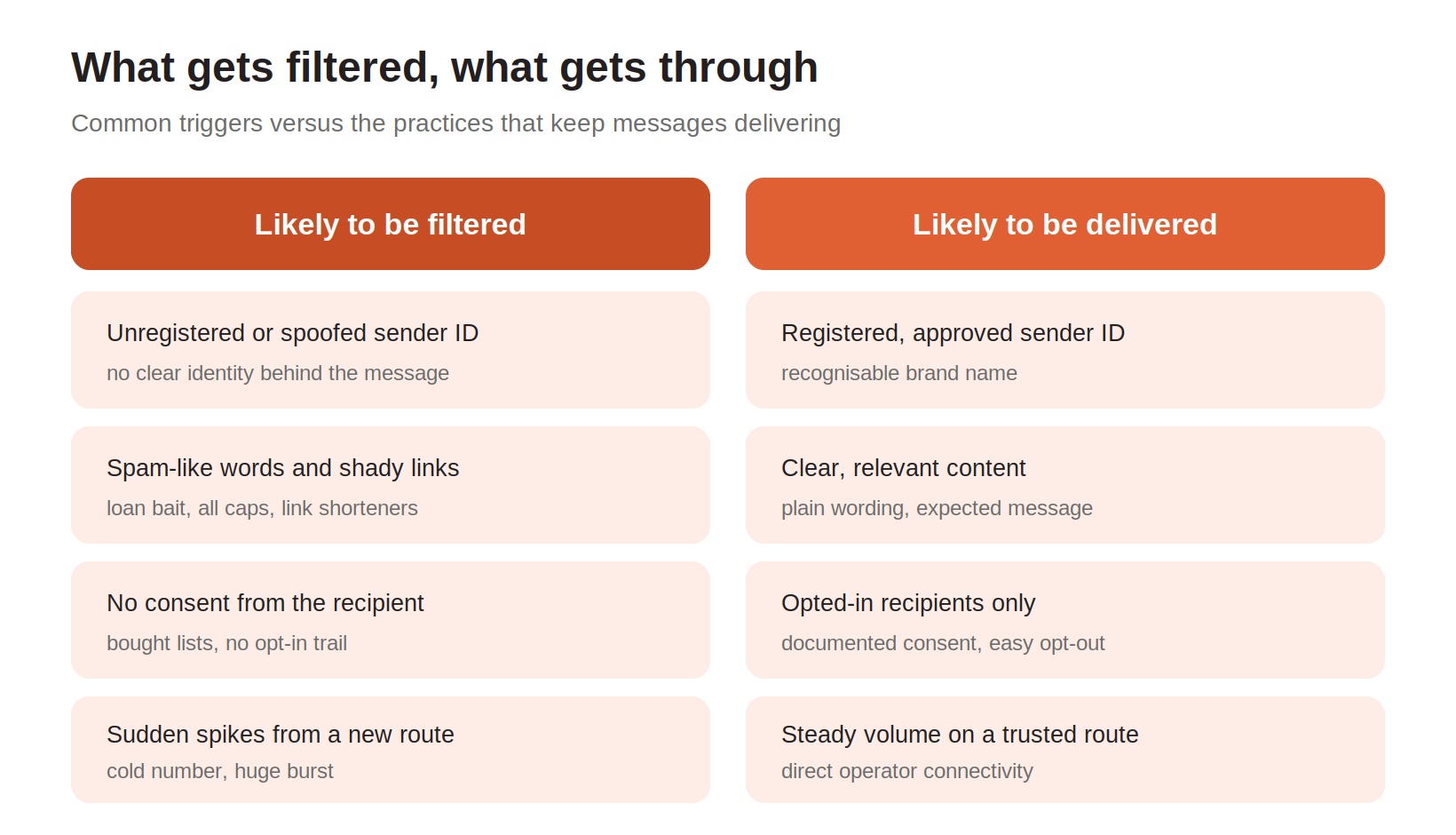
The left column lists what gets messages blocked. The right column lists what keeps them delivering.
The type of message you send also changes your risk. Transactional messages that a customer expects, like a one-time passcode or a delivery update, rarely get filtered because they are tied to something the customer just did. Promotional messages carry more risk and depend on clean content and clear consent. Unsolicited blasts to purchased lists are the most likely of all to be blocked.
Message type | Filtering risk | Why |
Transactional (OTPs, alerts) | Low | Expected by the user, tied to an action they took |
Promotional (offers, campaigns) | Higher | Needs consent and clean content to pass |
Unsolicited to bought lists | Very high | No opt-in, treated as spam by filters |
Filtering risk rises as messages move from expected and transactional to unsolicited and promotional.
This is why separating your transactional SMS from your promotional SMS is good practice. Each has different expectations, and mixing them on the same route can drag your delivery down.
SMS filtering and regulation in Ghana
Ghana's communications sector is overseen by the National Communications Authority, and mobile operators apply their own rules on top of any regulatory requirements. Sender ID registration, content standards and anti-spam measures are enforced at the operator level, and the specifics can differ from one network to the next.
Requirements around consent, sender registration and message content can also change over time, and they are not identical to the rules in Nigeria, Kenya or any other market. If you are unsure how a particular requirement applies to your business, confirm it for your own situation rather than assuming a rule from elsewhere carries over. The safe general principle holds everywhere: identify yourself clearly, message only people who agreed, and make opting out easy.
Register your sender ID
A registered sender ID is the single most effective thing you can do to reduce filtering. Instead of your message arriving from an unknown number, it arrives from your brand name, which operators and filters recognise as legitimate.
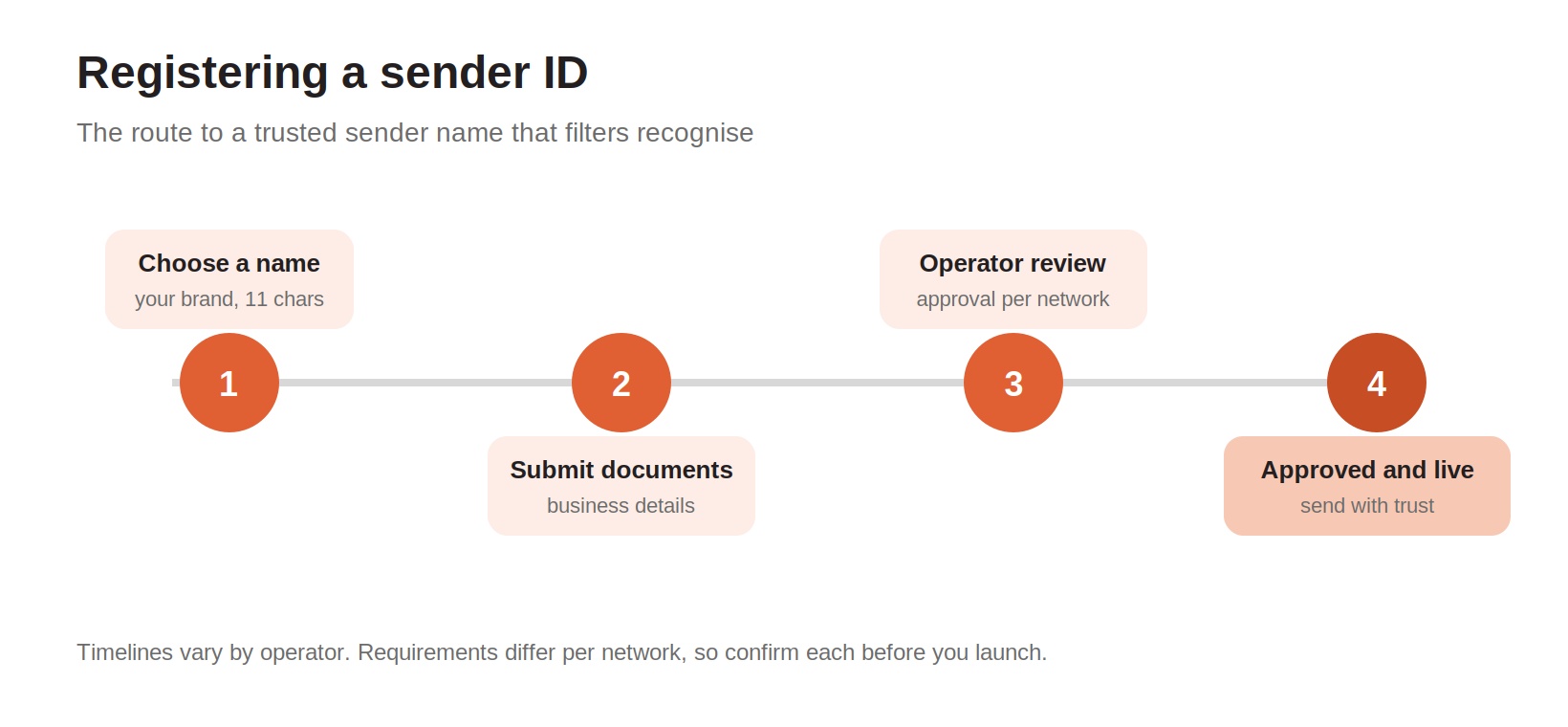
Registration takes a few steps and is approved per operator. Timelines and requirements vary by network.
You choose a sender name, usually up to eleven characters, that represents your business. You submit your business details for verification. Each operator reviews the request against its own criteria. Once approved, your name is live on that network, and your messages are sent with the trust that comes from a known sender. Because approval is per operator, plan for it before a launch rather than the day you want to send.
How to keep your SMS from being filtered
You cannot see inside an operator's filter, but you can remove the things that reliably trigger it. Most of it is about looking like the legitimate business you are.
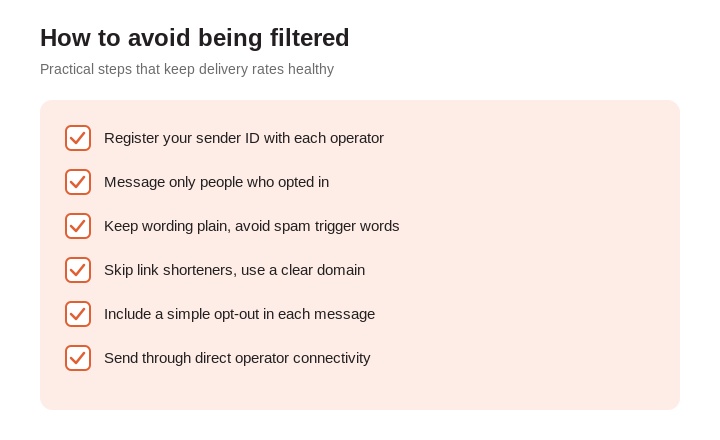
Work through these before your next campaign to protect your delivery rates.
● Register your sender ID with each operator you send through, so your brand name is recognised.
● Message only people who opted in, and keep a record of that consent.
● Keep wording plain and specific. Avoid spam trigger words, all caps, and exaggerated promises.
● Skip link shorteners. Use a clear, recognisable domain if you must include a link.
● Include a simple opt-out so recipients can stop messages, which keeps complaint rates low.
● Send through direct operator connectivity rather than an unpredictable grey route.
How Africala helps with SMS delivery
Filtering is exactly the problem a proper messaging platform is built to solve. Africala helps businesses in Ghana reach customers reliably through direct operator connectivity, registered sender IDs, and clean routing, so genuine messages are far less likely to be caught by filters. Whether you send order confirmations, OTP SMS delivery for verification, or approved marketing campaigns, the aim is the same: messages that arrive.
For teams that send at scale or automate messages from their own systems, Africala's SMS API handles the routing and sender configuration so you can focus on the message rather than the plumbing. Keeping your data protection and fraud practices sound also protects your sender reputation, which is part of what keeps delivery high over time.
If your business is seeing messages go undelivered, the fastest way to fix it is to move to a trusted route with proper sender registration. Explore Bulk SMS or talk to the Africala team about your delivery rates and volumes.
Frequently asked questions
Why are my SMS messages being filtered in Ghana?
Usually because of one or more spam signals: an unregistered sender ID, spam-like content, sending to people who did not opt in, or sudden large bursts from a new route. Filters block messages that carry these signals to protect subscribers. Fixing the underlying cause, starting with sender ID registration and consent, is what restores delivery.
How do I stop my business SMS from being blocked?
Register your sender ID with each operator, send only to people who opted in, keep your wording plain and free of spam trigger words, avoid link shorteners, and use a route with direct operator connectivity. These steps address the main things filters look for.
Does a registered sender ID guarantee delivery?
No, but it makes a large difference. A registered sender ID tells operators your messages come from a known business, which clears one of the biggest filtering hurdles. Content, consent, and sending patterns still matter, so registration works best alongside good sending practices.
Are transactional messages filtered less than promotional ones?
Generally yes. Transactional messages like one-time passcodes and delivery alerts are expected by the customer and tied to an action they took, so they carry fewer spam signals. Promotional messages depend more heavily on clean content and clear consent to pass filtering.
How long does sender ID registration take in Ghana?
It varies by operator, since each network reviews and approves requests on its own timeline. Because approval is per operator, it is best to start the process well before a campaign rather than on the day you want to send. A messaging provider can manage the registration on your behalf.
Can filtering affect one-time passcodes?
It can, if the message is sent through a poor route or an unregistered sender. Because OTPs are time-sensitive, filtering or delay can lock customers out of their own accounts. Sending codes through a trusted route with a registered sender, and keeping a fallback channel, reduces that risk.